biography, artist statement & cv
Melanie Cooper Pennington is a sculptor and artist based in Bloomington, Indiana.
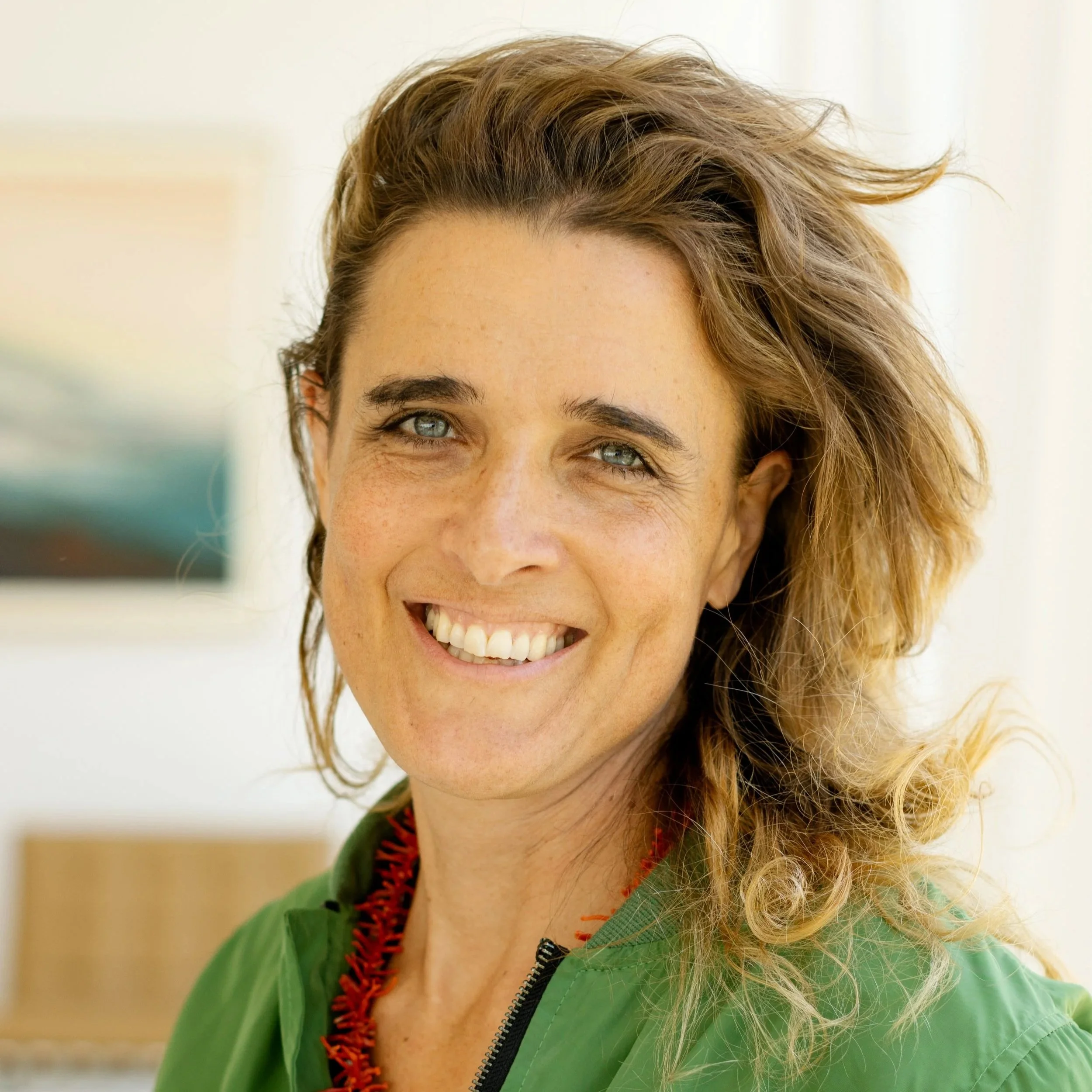
Melanie Cooper Pennington is a sculptor and artist whose work spans intimate figurative studies, large-scale installations, and public works. Using the body as a framework, she explores emotional experience, endurance, vulnerability, and transformation.
Her participatory bronze and acrylic sculpture, When it's warm outside, do you prefer to sleep in the nude?, commissioned by the Kinsey Institute, made her the first woman artist to commemorate a historical figure on Indiana University’s flagship campus. The work honors Alfred C. Kinsey, whose research transformed public understanding of human sexuality. Her public commissions also include a figurative bronze honoring Ryan White, the Indiana teenager whose fight to attend school after his HIV diagnosis helped reshape public policy and attitudes during the AIDS crisis. She has also created works for the Chicago Sculpture International Sculpture in the Parks program and the Indianapolis Art Center.
Cooper Pennington has presented solo exhibitions at Italy’s International Center for the Arts; New Harmony Gallery of Contemporary Art; ARTLINK Contemporary; and the IFell Gallery. Her work has also appeared in group exhibitions at ACRE Projects; Distortion Gallery; and the Grunwald Gallery of Art. Her sculptures are held in the collections of the Kinsey Institute, the Fort Wayne Museum of Art, Indiana University, and Italy’s International Center for the Arts.
She trained in figurative anatomy with instructors from the New York Academy of Art and with sculptors in Colorado and Arizona before earning her MFA at Indiana University in 2016. Her practice has been supported by residencies and fellowships at Sculpture Space, Vermont Studio Center, ACRE, Anderson Ranch Arts Center, and Haystack Mountain School of Craft.
artist statement
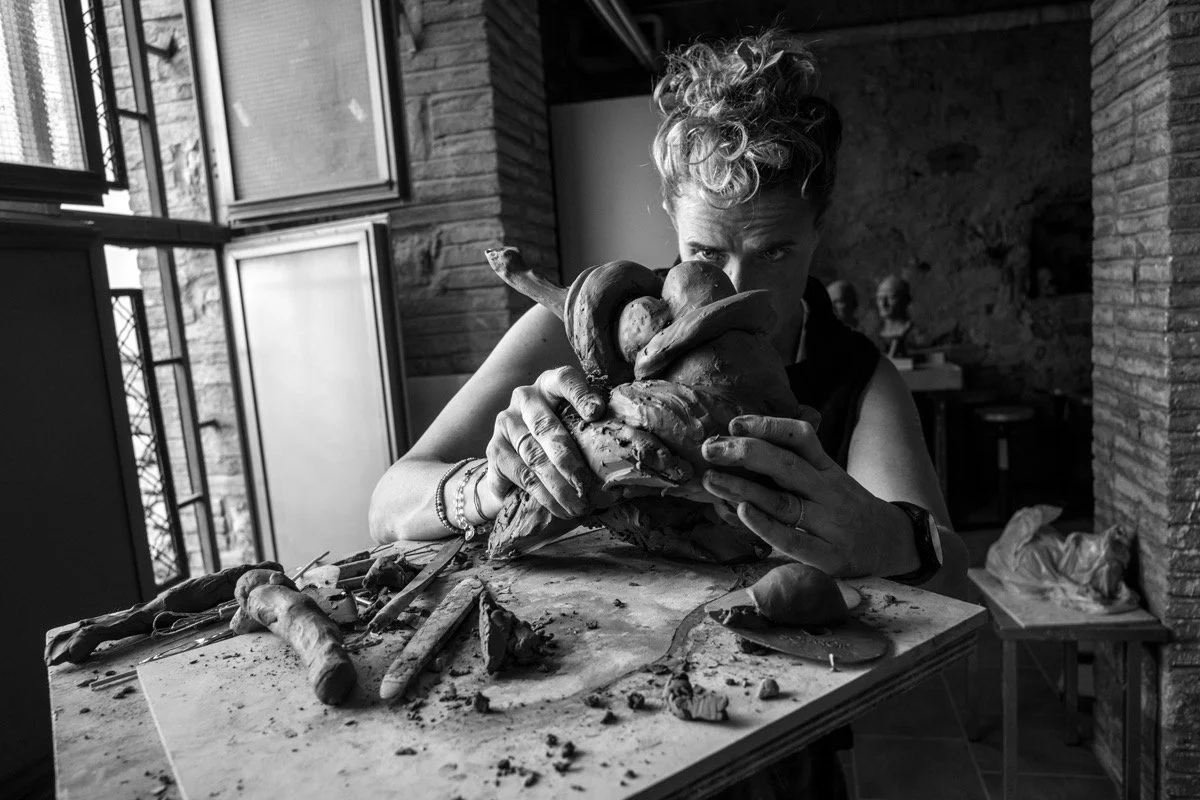
Sculpture has always been, for me, a way of giving form to the invisible.
I was a sensitive young person who did not feel safe sharing feelings out loud. Clay became a radical tool of communication—it could hold what I could not say. I could mold it into forms that carried the weight I could not otherwise put down, and somehow, that lightened the load. That is still what the work is for.
My figures are bent, compressed, suspended, and entangled—held in states of tension that resist resolution. They are burdened by invisible pressures and systems larger than themselves, yet they continue to brace, climb, carry, rest, and transform. In my work, the body is not so much a subject as a site: a place where psychological weight becomes physical form, and where what cannot be said is instead held, endured, or slowly released.
I work across scales and materials. Wood, fur, resin, steel, straw, and plaster are combined not for variety, but because each material carries its own quality of resistance—its own relationship to pressure, time, and the body’s memory of both.
I remove faces, hands, and feet from my figures—the features that tell you exactly who and what you are looking at—to focus attention on the feeling of a piece rather than its likeness. Realism gives answers. Abstraction makes room for questions. I am interested in the unresolved dimensions of being human: physical ecstasy, emotional weight, and the experiences that cannot be contained or explained neatly.
A monumental installation and an intimate figurative study ask the same questions at different volumes. The portrait commissions I undertake are part of the same inquiry: each seeks to create a figure that holds something true about a specific person’s experience of being in a body, in a life, and under pressure.
Drawing runs through all of it: the anatomical studies, the works on paper, and the sketches that precede and outlast the sculptures. These are not preparatory works. They are a separate way of thinking through the same problems: how the body stores what the mind cannot organize, how form becomes feeling, and how abstraction earns its weight.
The belief that the body stores experience is the engine of my practice. The work invites viewers to recognize their own tensions, their own endurance, and their own capacity to continue—not because the figures find resolution, but because they persist without it.
curriculum vitae
-
2016
MFA, Ceramics
Indiana University
1999
BA, Sculpture
Wheaton College -
2025
Shred My Skin, IFell Gallery, Bloomington, IN2023
Rapture, International Center for the Arts, Monte Castello di Vibio, Italy
Climb in and Back Out Again, New Harmony Gallery of Contemporary Art, New Harmony, IN2019
Humanimals in Precarious Positions, ARTLINK Contemporary, Fort Wayne, IN2012
Boulevard Fine Art, Hinsdale, IL2011
The Body is Present, Buerger Juell, Merchandise Mart, Chicago, IL2005
Fox River Financial Resources, Geneva, IL -
2026
Continuum, Grunwald Gallery, Bloomington, IN2024
Two Things are True, curated by Sarah Hanssen and Michelle Silver, Distortion Gallery, Beacon, NY2023
State of Clay, Grunwald Gallery of Art, Bloomington, IN
Bloomington Artist Festival, curated by Tamara Brown, FAR Center for Contemporary Arts, Bloomington, IN2021
Among Beasts, curated by Haley Inhart and Joseph Ovalle, sUgAR Gallery, University of Arkansas, Fayetteville, AR
Maternochronics, curated by Emily Zarse, online exhibition
Fibers Exhibition, curated by Tamara Kostianovsky, TheInArtGallery2020
Gendered Perspectives, Indiana University East, Richmond, IN2019
New and Next Exhibition, Grunwald Gallery, Bloomington, IN
New and Next Exhibition, Melvin Peterson Gallery, Evansville, IN
Plushie Show, curated by Kathryn Baczeski, Fried Fruit Art Gallery, Deland, FL
Play as Production Act 1, curated by Lucy Stranger, ACRE Gallery, Chicago, IL2018
Faculty Exhibition, Grunwald Gallery, Bloomington, IN2017
Log on Log off, Cyber Infrastructure Building, Bloomington, IN
Station to Station, Grunwald Gallery, Bloomington, IN
Sculpture in the Parks, Chicago Sculpture International, Chicago, IL2016
Two Person Exhibition, Tim Faulkner Gallery, Louisville, KY
Installation Nation, Indianapolis Art Center Sculpture Park, Indianapolis, IN
Two Person Exhibition, Primary Colors Gallery, Indianapolis, IN
Witness Your Self, Grunwald Gallery, Bloomington, IN2015
Group Exhibition, IFell Gallery, Bloomington, IN
Group Exhibition, Community Supported Arts, Bloomington, IN
Kinsey Institute International Juried Show, curated by Garry Milius, Grunwald Gallery, Bloomington, IN2014
Non-Graduating MFA Exhibition, Grunwald Gallery, Bloomington, IN2012
National Juried Show, Oak Park Art League, Oak Park, IL
Open Studio, Haystack Mountain School of Craft, Deer Isle, ME
Body Language, Oak Park Art League, Oak Park, IL
Group Exhibition, Lane Allen Architects, Batavia, IL2011
Group Exhibition, Burning Bush Gallery, Wheaton, IL2006
Juried Exhibition, One Fine Art Gallery, Chicago, IL2005
Loveland Invitational Sculpture Show, Loveland, CO -
2026
Ryan White Memorial Commission, Indiana University, Bloomington, IN
Bloomington Trades District Public Sculpture Project, funded through the Lilly Foundation CCC Grant2025
Kinsey Institute Medal of Honor Commission2022
Alfred C. Kinsey Bronze Sculpture Commission, Kinsey Institute, Indiana University, Bloomington, IN2017
Cyberinfrastructure Building Commission, Indiana University, Bloomington, IN2016
Installation Nation, Indianapolis Art Center Sculpture Park, Indianapolis, IN -
2026
College and Community Collaboration (CCC) Grant, Lilly Foundation, Bloomington, IN2024
Sculpture Space Residency, Utica, NY2023
International Center for the Arts Residency, Monte Castello di Vibio, Italy
IU Presidential Arts & Humanities Research Travel Award2022
Trustee Teaching Award, Indiana University2021
Best in Show, Fibers Exhibition, TheInArtGallery2018
ACRE Residency, Steuben, WI
Anderson Ranch Arts Center Residency, Aspen, CO2017
Full Fellowship Residency, Vermont Studio Center2016
Installation Nation Award, Indianapolis Art Center2015
Grant-in-Aid Recipient, Indiana University
Selected by Michelle Grabner for Juried Master Class, Indianapolis Museum of Art
Visitors Choice Award, Kinsey Institute International Juried Show
Dean’s Award, Grunwald Gallery Non-Graduating MFA Exhibition2012
Haystack Mountain School of Craft Work/Study Residency, Deer Isle, ME
Best in Show, Oak Park Art League
People’s Choice Award, Body Language Exhibition -
International Center for the Arts, Italy
Kinsey Institute for Research in Sex, Gender, and Reproduction
Fort Wayne Museum of Art
Indiana University -
2025
The Eternal Vine, CCC Artist Grant Lecture, Bloomington Trades District
The Potential of an Art Degree, Indiana University2024
Spring Cohort Artist Talks, Sculpture Space, Utica, NY2023
Climb in and Back Out Again, New Harmony Gallery of Contemporary Art, New Harmony, IN
Lineages of Birth, Bloomington, IN
On Rapture, International Center for the Arts, Monte Castello di Vibio, Italy2021
The Nude and Sculpture, Indiana University2019
Sculpture and Drawing, Indiana University2017
Feed Your Self, Chicago Sculpture International -
2021
Artist Mother Podcast, Painting at Night Annual Exhibition
InArtGallery, Bigger than Big Exhibition2017
Vermont Studio Center Fellowships Juror -
2025–present
Senior Lecturer and Area Head of Sculpture, Indiana University2019–2025
Lecturer, Indiana University2016–2018
Visiting Assistant Professor of Sculpture, Indiana University -
2025
Cookeman, Claude. “Bloomington Sculptor Reaches ‘Punctuation Point’ with Her Latest Exhibition.” Limestone Post, May 1, 2025.Reed, Zoe. “Ryan White Died Before He Could Attend IU. Now, He’ll Be Memorialized on Campus.” Indiana Daily Student, December 10, 2025.
Rosenzweig, Brian. “Ryan White Never Got to Go to IU. A New Sculpture Ensures He Will.” The Herald-Times, December 15, 2025.
2023
“Kinsey Institute Announces Cynthia Plaster Caster Collection.” Kinsey Institute.“Indiana Artist Melanie Cooper Pennington to be on Display at USI New Harmony Gallery of Contemporary Art.” University of Southern Indiana.
2022
“Sculpting Kinsey: Follow the Process of IU’s Alfred Kinsey Sculpture.” Indiana University Bloomington.Hassfurder, Ann. “Kinsey Institute Celebrates 75th Anniversary with Bronze Sculpture of Founder Alfred C. Kinsey.” Indiana Daily Student.
Brosher, Barbara. “From Surplus to Sculptures.” IU Bloomington Today.
Boreman, Laurie D. “Kinsey Institute Still on the Cutting Edge after 75 Years.” Limestone Post.
2021
Buteyn, Kaylan. “Harnessing Our Inner Strength to Make Great Art.” Artist Mother Podcast.Franco, Bernadine. “Melanie Cooper Pennington: Birthing, Empowerment and Beasts.” Women at the Helm.
2016
Grossman, Dan. “From Installation Nation to the Art Shack.” NUVO.Kasender, Yael. “We’re Caught in a Trap: Melanie Pennington’s Gentle Giants.” WFIU Arts and Culture.
2013
Smith, Nan. 500 Figures in Clay. Lark Books / Union Square & Co.